
Plumbing problems don’t explode out of nowhere. They creep. Quietly. One drip. One slow drain. One weird noise you promise to “check later.”
Here’s the part most homeowners don’t like hearing: the average U.S. home wastes close to 10,000 gallons of water every year because of leaks, according to the EPA. That’s not bad luck. That’s stuff people ignored. If you’ve ever called a professional plumber in Hurst in a panic, there’s a good chance the warning signs were there weeks or months earlier.
This article breaks down the plumbing problems that show up in almost every house. No fluff. Just what usually causes them, what actually works, what doesn’t, and when you should stop messing with it yourself.
The Truth About “Common” Plumbing Problems
Most plumbing issues are boring at first. That’s why they get ignored.
A slow drain still drains.
A toilet still flushes.
A faucet still works — even if it drips.
That’s the trap.
Plumbing doesn’t fail loudly until it’s expensive. Slow drains. Weak pressure. A toilet that runs sometimes. These don’t feel urgent. But ignoring bathroom plumbing issues almost always costs more later.
Why Homeowners Miss the Signs (It’s Not Laziness)
Most people aren’t lazy. They’re busy. Plumbing sits behind walls and under sinks, so it’s easy to forget.
Also, YouTube makes everything look easy.
Sometimes it is.
Sometimes it very much isn’t.
Knowing the difference is where money is saved.
1. Dripping Faucets That “Aren’t a Big Deal.”
Why does this keep happening
Faucets drip because something inside has worn out. Usually a washer or cartridge. Hard water speeds this up, and Hurst has plenty of it.
The drip looks harmless. It isn’t.
One drip per second wastes over 3,000 gallons a year. That’s real money down the drain.
What usually works
Replacing the washer or cartridge
Tightening fittings gently (not Hulk-tight)
What often fails
Ignoring it
Overtightening and cracking parts
My take: If a faucet is more than 10–12 years old and leaking again, stop rebuilding it. Replace it. You’re throwing good times after bad.
2. Slow Drains That “Eventually Clear.”
Whydo drains slow down
Clogs don’t show up overnight. They grow.
Hair. Grease. Soap. Food. All of it sticks to old pipe walls like gum on a shoe.
Older homes in Hurst are especially bad because pipes aren’t smooth inside anymore.
What actually works
Drain strainers
Hot water rinses (not boiling)
Enzyme cleaners over time
What fails almost every time
Chemical drain cleaners
Repeated plunging with no plan
If a drain clogs every few weeks, it’s not a coincidence. It’s a buildup problem.
3. Toilets That Run When No One Is Using Them
Why is it more serious than it sounds
A running toilet is quiet. That’s why people ignore it.
But it can waste up to 200 gallons a day. Yes, per day.
Usually, it’s a flapper or fill valve that isn’t sealing.
What works
Toilet repair kits
Adjusting the float
Replacing worn rubber parts
What doesn’t
Jiggling the handle forever
Pretending it stopped
Toilet repairs are cheap. Water bills are not.
4. Low Water Pressure That “Must Be Normal.”
Why pressure drops
Low pressure feels annoying, but it’s usually telling you something.
Common causes:
Mineral buildup
Leaks
Old galvanized pipes
Pressure regulator issues
In many Hurst homes, aging supply lines are the real culprit.
What helps
Cleaning aerators
Checking pressure at the hose bib
If pressure is low everywhere, it’s not the faucet. It’s the system.
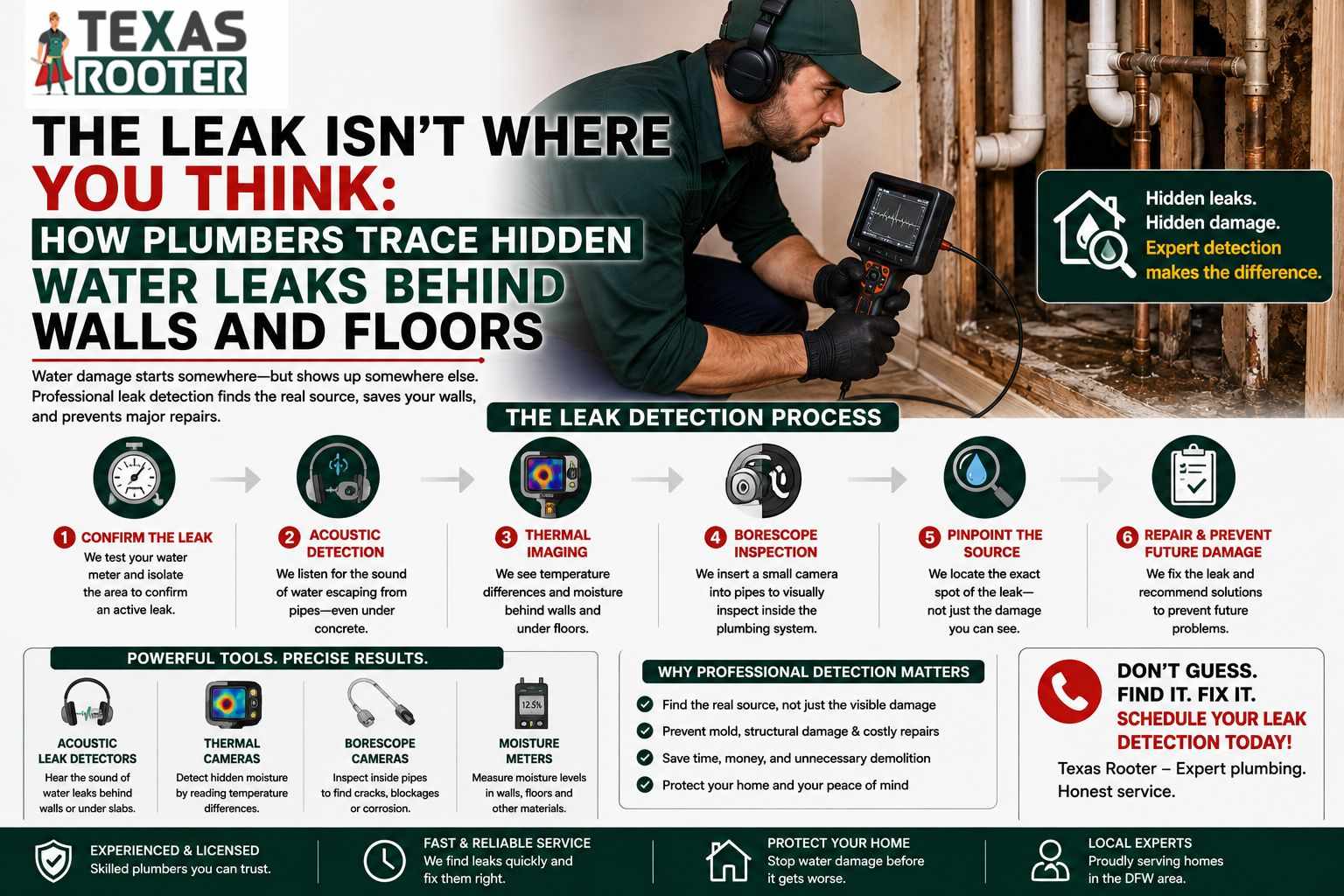
5. Leaks Under Sinks or Inside Walls
Why leaks get expensive fast
Water doesn’t need much time to cause damage.
A small leak can:
Rot cabinets
Grow mold
Ruin drywall
According to the Insurance Information Institute, water damage is one of the most common home insurance claims in the U.S.
What usually works
Tightening loose fittings
Replacing worn supply lines
What fails
Tape-only fixes
Ignoring “small” leaks
If you see water more than once, it’s not temporary.
6. Water Heater Problems People Shrug Off
How water heaters warn you
Water heaters almost always give signs before failing.
Watch for:
Hot water is running out faster
Popping or rumbling sounds
Rusty-looking water
Sediment buildup is the big issue here.
What works
Flushing the tank yearly
Checking the anode rod
Keeping temp at 120°F
The U.S. Department of Energy says maintenance can improve efficiency by up to 15%. That’s not theory. That’s math.
7. Sewer Line Issues (The One Everyone Hates)
Why sewer problems spiral fast
Sewer issues don’t give many second chances.
Causes include:
Tree roots
Collapsed pipes
Years of buildup
Older neighborhoods with mature trees, like many parts of Hurst, are prime candidates.
Early warning signs
Multiple drains are backing up
Gurgling toilets
Sewer smells outside
Camera inspections save money. Guessing does not.
DIY vs Calling a Plumber (Be Honest)
DIY is great — until it makes things worse.
A Real Hurst Scenario I’ve Seen Too Often
The homeowner had a slow drain and a running toilet. Didn’t seem urgent.
Three months later:
Mold under the sink
Higher water bills
Main line clog
The final bill was four times higher than fixing it early. This story isn’t rare. It’s common.
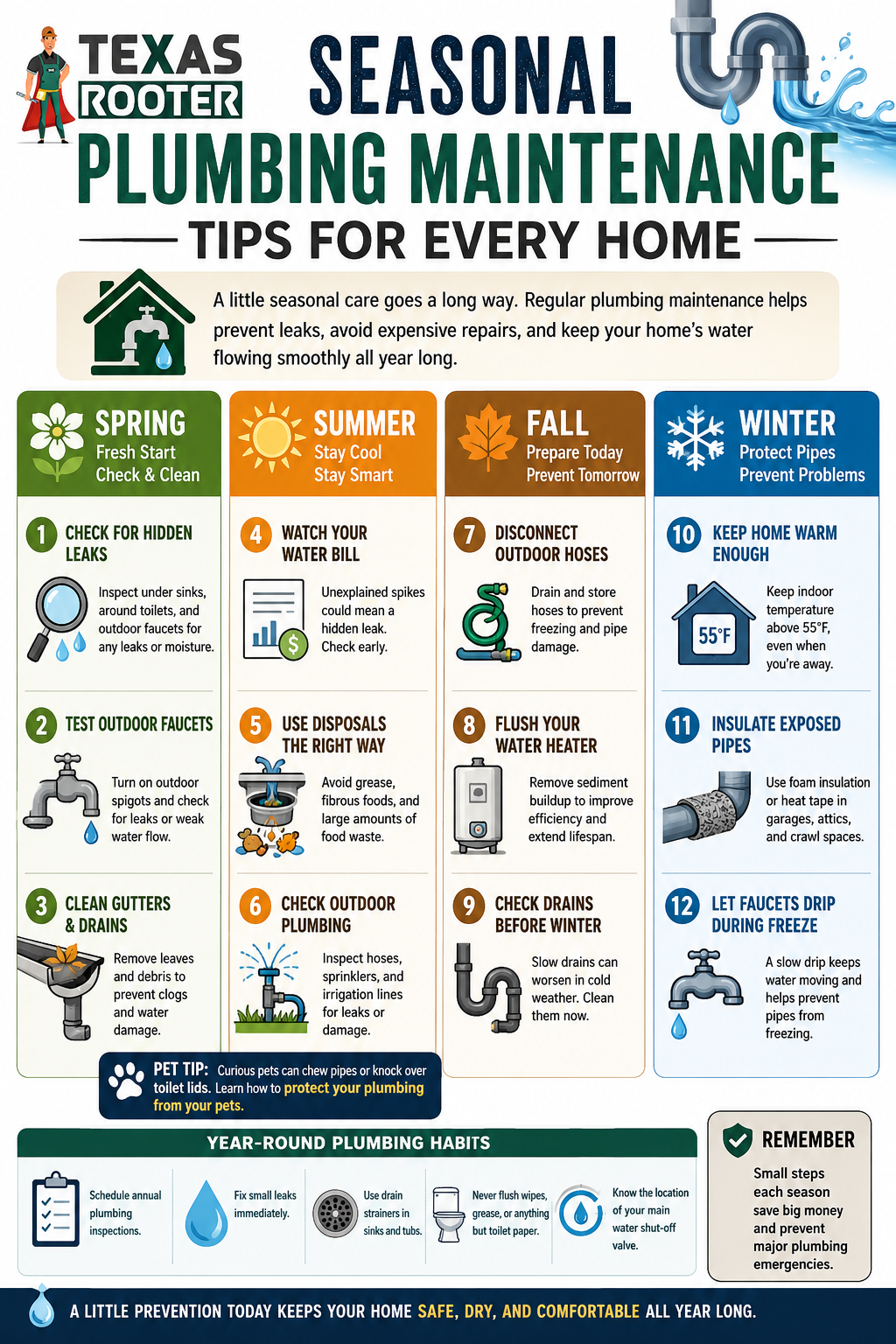
A Simple Routine That Actually Prevents Problems
You don’t need tools. Just awareness.
Look under sinks once a month
Listen for toilets refilling
Watch your water bill
Flush the water heater yearly
Don’t ignore repeats
Most disasters are preventable. They just aren’t dramatic at first.
Why a Local Plumber Matters
A plumber who works in Hurst knows:
Local water quality
Common pipe materials
Soil movement issues
That knowledge saves time and avoids unnecessary repairs.
Final Thought (The Honest One)
Here it is:
Plumbing problems don’t get cheaper with time.
They either stay small or get expensive. There’s no third option.
That’s why Texas Rooter focuses on early fixes, clear explanations, and not waiting until water is on the floor.
Key Takeaways
Most plumbing problems start small
Leaks and running toilets waste serious water
Drains clog slowly, then all at once
Water heaters fail quietly
Fast fixes save real money
A trusted plumber in Hurst makes a difference


Write a comment ...